Originally published at: Cooler weather for Houston by Sunday morning, as we assess recent rain impacts on drought – Space City Weather
In brief: Today, we look at how drought has changed in the Houston area since last weekend’s rain (it hasn’t). We also take stock of our weekend cold front and look out in time at rain chances over the next 10 days, which are generally absent.
Did this past weekend’s rain help with drought?
No. Technically, it did not. Drought coverage remained unmoved over the last week, with about 95 percent of the area in some sort of drought and over 75 percent in severe drought.
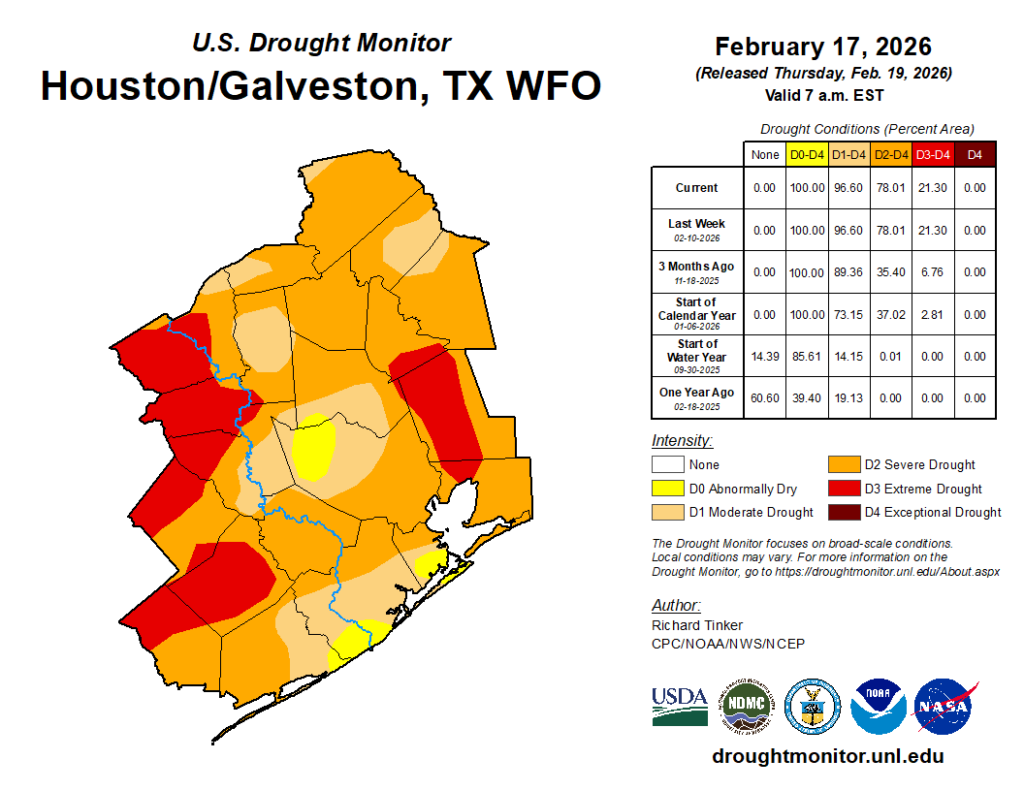
Keep in mind that “drought” itself carries a number of varying definitions. The drought monitor maps like above capture the bulk of the story but not all of the story. Sure, did this past weekend’s rain help matters? Absolutely. But when you’re talking about longer term issues with things like agriculture or water supply or things like that, the story can vary over time and space. Either way, we need more rain. And we’re not gonna get it for a bit.
Today & Saturday
Other than areas of dense fog this morning, perhaps lingering into the afternoon near Galveston, things look pretty quiet today and tomorrow. Expect highs near 80 inland and 70s nearer the coast. Outside of low clouds and fog in the morning, look for hazy conditions with clouds and sun. A few drips or drops are possible with a shower or two in area. Cedar pollen remains high, so you may be sneezy.
A cold front is going to advance through the area on Saturday evening, wiping out the haze and fog. It will also wipe out the warmth and humidity. Look for gusty winds Saturday evening, with gusts up to 30 mph inland for a short time and gusts up to 35 mph or so on the Island. The front itself should have little to no fanfare, as it will be mostly a dry front.
Sunday
Temperatures will drop off Saturday night, bottoming out in the 40s over much of the area by Sunday morning.
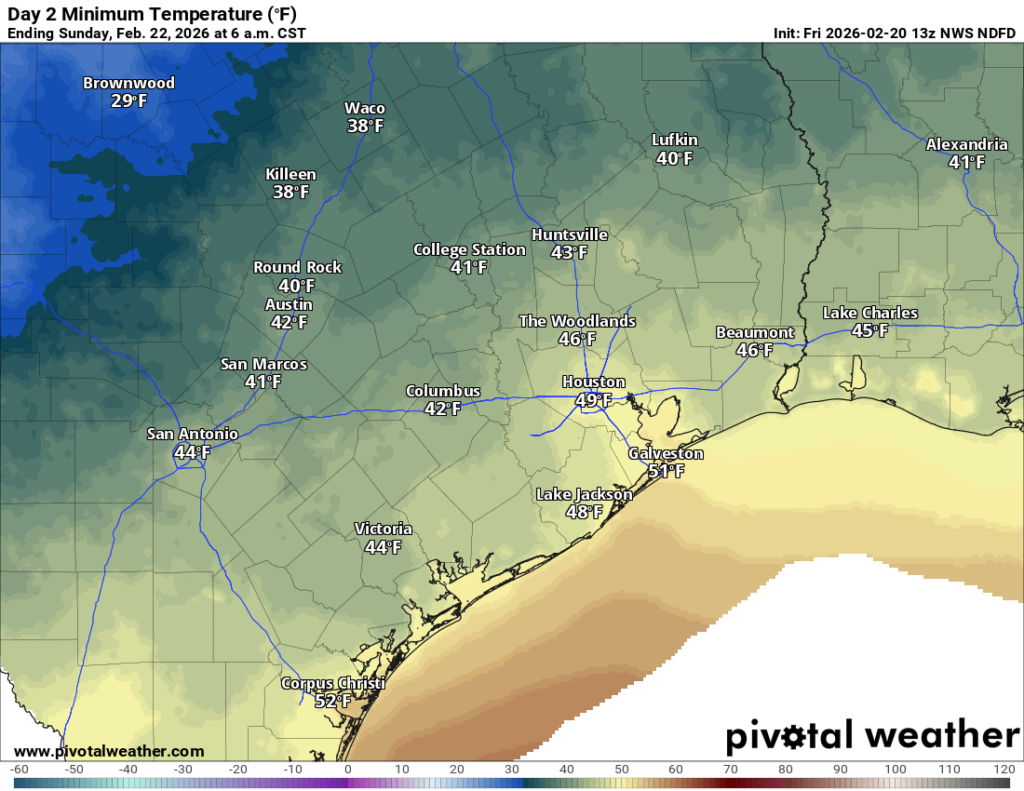
The breeze should remain all day but it will lower in intensity somewhat. We should see a return to sunshine, dry air, cool air, and low humidity. Look for highs in the 60s on Sunday.
Early next week
The early week will be “post-frontal pleasant” with lows in the 30s and 40s and highs in the 60s, perhaps near 70 by Tuesday. Skies should be sunny.
Later next week
It’s possible that another weak front passes through the area on Wednesday or Thursday, which could usher in another round of gusty winds and lower humidity. Before that, highs will peak back near 80 degrees or so.
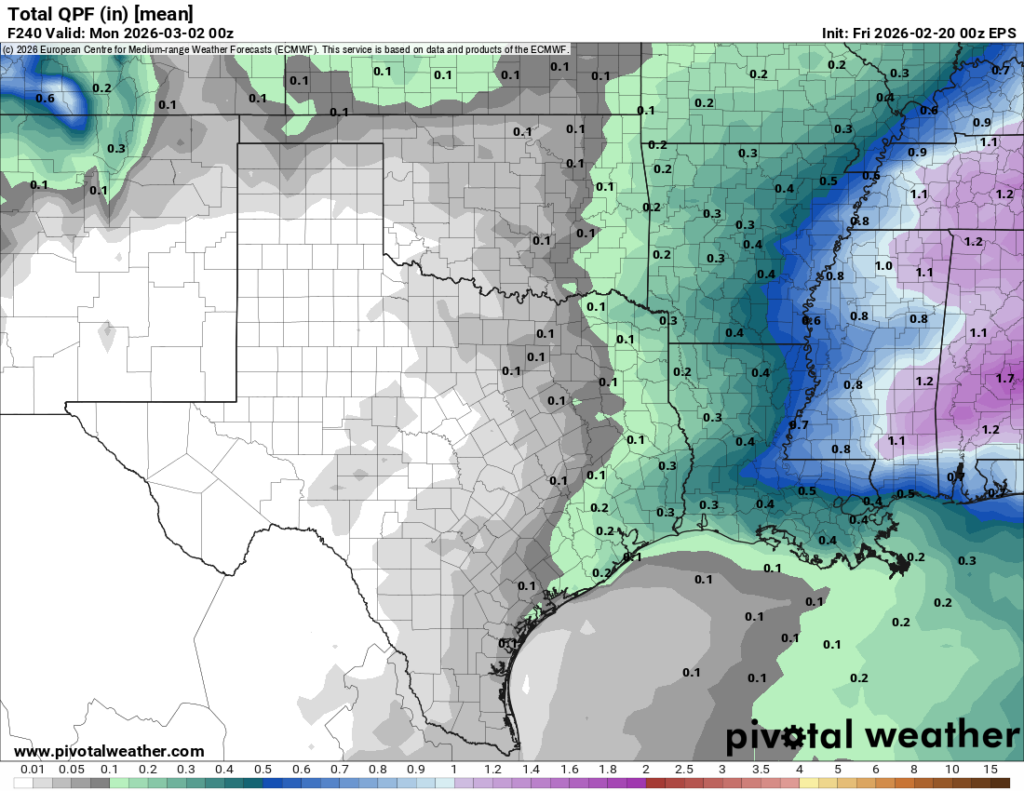
Unfortunately, our rain chances over the next 10 days are minimal. Enjoy the generally nice weather, but let’s hope for rain again sooner than later.
